Abstract
How can artwork display the complexities of how overwhelming it can be to be sentient, and how does this correlate to emotional and physical intimacy, sensory experiences, and thought? Can a body of work be created to bring out the thoughts and feelings we keep in the background of our minds, muddled by normalcy? I seek to peel the layers of thoughts, habits, and memories of my mind to further understand myself by translating them into visual compositions. Often, living and thinking can be incredibly overwhelming and the creation of this body of work has helped to break down individual experiences, feelings, and places that feel as though they are pulling at my mind. These works not only function as an exploration of the sensory, but as a diary of what feels most significant at certain times of my life
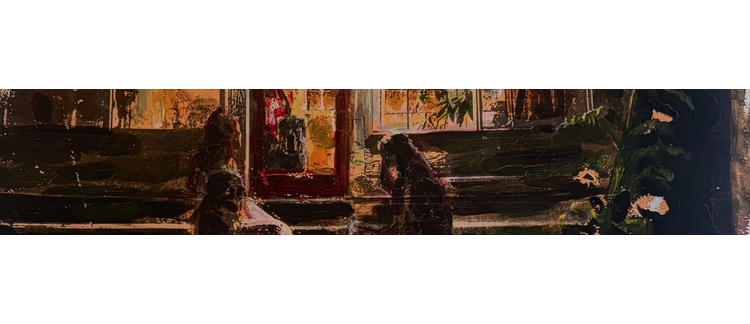
As a body of artwork, To Feel Many Other Ways explores the complexities behind sensory experiences from a hypersensitive and queer lens. Oftentimes, this work is inspired by touch, pain, and intimacy in lesbian relationships, using the female figure to display bodies crashing into each other. Exploring both pleasure and pain and the area in between, these works use symbols of sharpness to signify pain and closeness between nude female figures to depict desirable closeness.
Senses are often overlooked as we are used the the normalcy of feeling, seeing, hearing, etc., but exploring the privilege we have been given has led to the creation of these works. To feel and to document it through our perception is a gift. There’s art behind observation and noticing these patterns, and this work seeks to capture the energy behind lived moments, whether they be overwhelming, painful, pleasurable, or a muddled mixture of it all.
Keywords
art
How to Cite
Flanagan, W., (2025) “To Feel Many Other Ways”, Capstone, The UNC Asheville Journal of Undergraduate Scholarship 38(2).
77
Views
144
Downloads